A Five-Minute Balcony Reset Before Guests Arrive
A five-minute balcony reset clears a place to set down a drink, gathers stray supplies, and adds one plant detail without turning hosting into a chore.
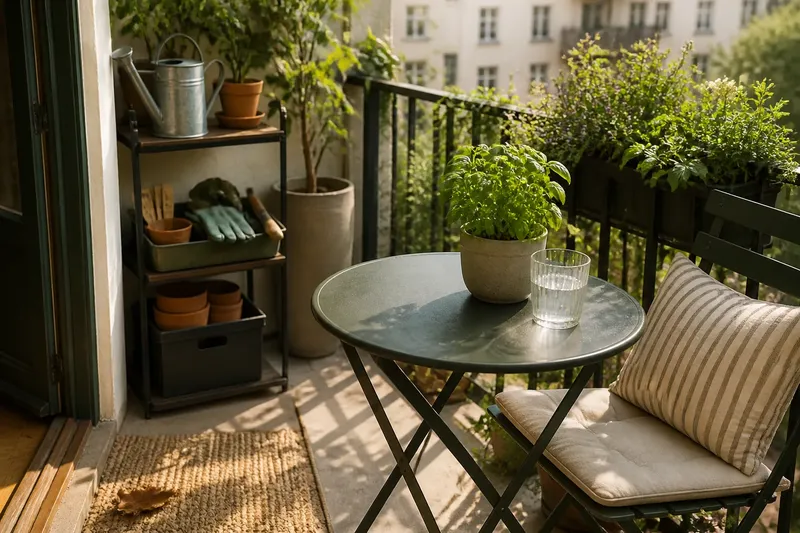
You hear the doorbell, glance at the balcony, and spot a watering can beside the chair, a pair of gloves on the table, and a dry leaf caught near the threshold. A five-minute balcony reset can make the space feel ready for company without moving every pot or pretending the garden is a showroom.
The useful distinction is between making room for people and tidying the garden itself. For an arrival-time reset, choose one usable surface, group loose items, and add a small plant detail only if it helps the space feel considered. Two approaches work especially well: a surface-first reset for immediate use, and a guest-flow reset for balconies where people need room to come and go.
Choose a reset that fits the visit
A surface-first reset suits a balcony where guests will sit, eat, or set down a cup. The table or ledge matters more than a perfectly swept floor, so the routine begins by making one spot usable and putting its surrounding clutter into a single, sensible group.
A guest-flow reset suits a narrow balcony, a shared outdoor landing, or a gathering where people may step out briefly rather than settle in. Its priority is a clear route between the door and the seating area; a small plant detail comes last, if there is room.
Neither approach asks you to reorganize containers, prune plants, or start a larger cleaning job. Pick the one that addresses the inconvenience a guest would notice first: nowhere to set a glass, or nowhere comfortable to stand.
Clear one surface before touching the rest
Choose a surface that can actually serve the visit: a small bistro table, a stable bench end, or a wide sill that is safe and convenient to use. Remove only what prevents that surface from doing its job. Seed packets, hand pruners, a saucer, or a folded garden cloth can move together to a nearby shelf, storage box, or designated tray.
Give the surface a quick pass with a dry cloth or a lightly damp one, depending on the material. If it is wet from watering, let it air-dry rather than piling objects back onto it. Keep drinks and snacks away from potting mix, plant treatments, and tools; a clear, clean spot is more useful than a decorative arrangement.
Say you have a narrow table with a watering can, empty nursery pot, and plant label spread across it. Move those items together to a garden tray, wipe the open tabletop, and leave the tray in its usual storage place; the observable result is a usable landing spot without a hunt for supplies later.
Group loose items instead of hiding them
Loose garden items often look more disorderly when each one is moved to a different corner. Gather the small things that belong together—such as gloves, labels, and hand tools—into one container, while keeping pots and watering equipment in their regular storage area.
A shallow tray is useful for items that need to remain visible and easy to carry. A lidded outdoor box works better for belongings that should stay dry or out of sight, provided the items are clean and dry before storage. If there is no suitable box, one tidy cluster beside the potting shelf is preferable to an improvised pile on a chair.
Keep the group compact and out of the walking route. Avoid setting objects on railings or on the narrow edge of a ledge; a gust or accidental bump can send them down. For the arrival routine, the aim is not concealment but a clear, deliberate place for each loose item.
Use the surface-first or guest-flow approach
The two approaches overlap, but their order changes. Surface-first gives the table or seat a quick reset before you consider the walkway. Guest-flow clears the route first, then checks whether a convenient landing spot is available.
- Choose surface-first when guests are likely to sit and share food or drinks. Make one table or bench end ready, then gather nearby supplies.
- Choose guest-flow when the balcony is narrow or people will be stepping in and out. Move loose items away from the doorway and seating route before touching the table.
- Choose a minimal reset when the visit is brief. Clear the most useful surface, group anything stray, and skip extra styling.
Imagine the door opens directly beside a small chair, while the table is already clear. If guests will be moving through to look at the plants, shift the watering can and plant tray out of the route first; if they are coming out to sit, leave the route alone and make the chair-side surface easy to use.
When the right choice is unclear, start with the spot that would make a guest hesitate: a blocked step, a cluttered seat, or no place to put a cup. Fix that one thing, then stop unless time remains.
Add one plant detail without staging the garden
A small plant detail can make the balcony feel tended while keeping the plants themselves undisturbed. Choose something already at hand: turn a healthy potted herb so its fuller side faces the seating, remove a fallen leaf from the table, or place a small pot near the clear surface if it does not crowd the space.
Use the plant’s actual condition as your guide. A thirsty plant, a drooping stem, or a pot with damp soil is not an invitation to rush through extra watering or pruning just for appearance. Leave routine care for its usual time; a guest-ready detail should be simple, reversible, and comfortable for the plant.
Skip the accent entirely if there is no natural place for it. A clean tabletop and a clear route already let the balcony’s existing greenery provide the setting.
What should a five-minute balcony reset include?
What should I clear first?
Clear the surface or route guests will use first, depending on the visit. Removing the main obstacle gives the balcony an immediate practical purpose without inviting a larger cleanup.
Where should I put garden tools?
Group small tools and labels in a tray or their usual storage spot, and keep the group away from the walking route. Do not leave sharp tools where a guest may reach for them by mistake.
Should I water plants before guests arrive?
Water only if the plant’s normal care calls for it, not as a last-minute styling step. Wet soil, drips, or a damp table can make a small balcony less convenient to use.
What if there is no room for a table?
Make one chair, bench end, or other stable spot comfortable to use, then keep the route clear. If no surface is suitable for drinks, guests can keep them indoors rather than balancing cups on pots or railings.
Let the reset stop when the balcony is usable
A five-minute balcony reset is successful when there is somewhere to sit or set down a drink, loose supplies are grouped, and the route feels easy to use. It does not need to erase the signs of gardening; a watering can in its proper place and healthy pots can remain part of the scene.
Keep the order that worked in mind for the next visit: decide whether the surface or the route matters more, gather the loose items, and add one plant detail only if it fits. The simplest useful finish is often to put the cloth away and open the door.