Window Box Gardening Connects Home Life to the Street
Window box gardening brings plants into a city home without a yard and creates a cared-for street view shaped by light, weather, and household routines.
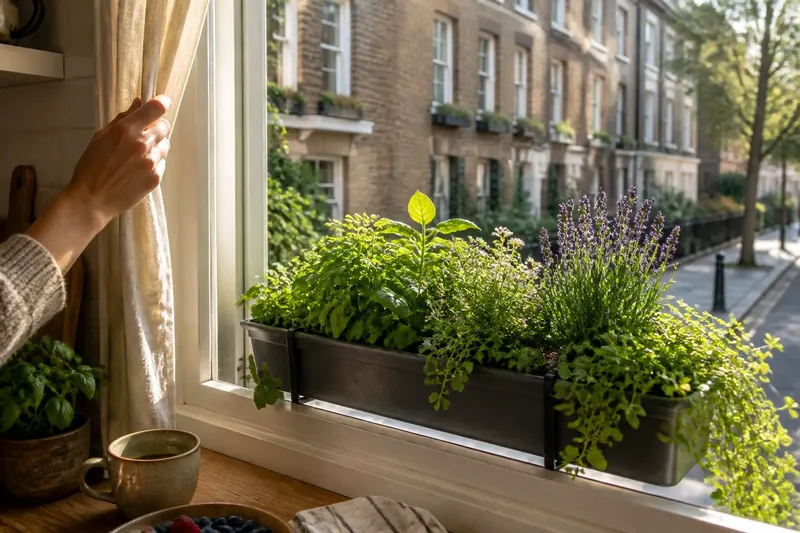
At breakfast, someone opens the kitchen curtains and spots a new leaf in the window box above the sidewalk. Window box gardening brings a small growing space to the edge of a home, where residents can tend it and neighbors can see it.
A box at a sill or railing does more than occupy a narrow footprint. It makes the threshold between private rooms and shared streets visible, and its changing plants can give a familiar facade a distinct character.
Window box gardening makes a threshold visible
A garden plot is rooted in shared or private ground; a window box moves growing upward, close to a room. That placement changes the gardener’s routine: watering, pruning, and noticing new growth can happen beside a window rather than in a yard.
The arrangement also creates two views. From indoors, a resident sees the plants against the weather; from the sidewalk, passersby encounter a strip of foliage or flowers at the building’s edge. The same planting can serve the household and contribute to the street without being designed as a formal public display.
Before choosing a container or plants, check the window’s light and wind exposure, the drainage route, and the support permitted by the building. Review landlord or association rules and the manufacturer’s installation instructions before placing anything outside.
Urban window boxes carry a distinct history
Window boxes belong to a broader tradition of making domestic life visible at the facade. Their history is not one uniform story: materials, building styles, and customs differ by place, and a box on a city apartment is not the same object as a planter on a townhouse or a rural cottage.
In older urban streets, repeated windows and ledges gave residents a shared architectural frame, while personal plant choices could distinguish one home from another. Today, the same contrast remains useful: the building supplies the rhythm, and each household decides whether to add herbs, foliage, flowers, or no planting at all.
That distinction keeps the historical point grounded. A window box is neither a universal urban tradition nor proof that every resident can safely install one; it is one way people have adapted household space to the shape and rules of a building.
Plants and containers shape the view from both sides
From a sidewalk, an arrangement is read as a simple composition. Taller stems may show above the sill, while lower foliage fills the container; from indoors, the same plants should suit the available light and the resident’s routines. Avoid crowding a box just to make it look full at once.
Container material and construction affect weight, drainage, and how the box attaches. Follow the product’s directions and building requirements, and do not rely on appearance alone to judge whether a box is secure. If installation or structural capacity is uncertain, ask a qualified building professional or the property manager.
Imagine a renter with a bright kitchen window, a narrow sill, and no yard. They first confirm that the lease permits an exterior box and that the building allows a specific supported container; then they choose compact herbs suited to the window’s light, keep the drainage path clear, and water when the potting mix begins to dry. The expected result is a modest harvest within reach and a green view from the sidewalk, provided the support and care remain appropriate.
Seasonal changes give a block a living rhythm
A window box can show buds opening, foliage changing, or a container resting between plantings. These shifts offer a small seasonal signal to people passing a familiar building, without requiring every display to remain equally lush throughout the year.
Use observation to make future choices. Notice when direct sun reaches the sill, how wind affects the mix, and which plants remain comfortable in those conditions; then select plants whose needs fit the site rather than relying on appearance alone.
A simple routine helps: inspect leaves and stems, remove spent flowers when appropriate, and keep drainage openings clear. If a plant struggles despite suitable care, replace it with an option better matched to the window rather than adding more plants to fill the space.
Good upkeep respects the shared space
A loose container, blocked drainage, or neglected foliage can affect the building and people below, so maintenance is also a neighborly consideration. Secure installation and careful watering matter as much as the arrangement’s appearance.
There is no need for a coordinated street-wide scheme. One household may prefer culinary herbs, another may choose foliage, and a shaded window may support a quieter display. The street’s character comes from these differences as well as from the repeated shape of its windows.
- Check whether the lease or building rules allow an exterior box; if they do, follow the stated conditions, and if they do not, choose an indoor sill planter or ask for written clarification.
- Check the window’s direct sun and shade across the day; if the spot suits sun-loving plants, consider those options, and if it remains shaded, choose plants labeled for lower light.
- Check whether the box has open drainage and where runoff will go; if water can drain without affecting the facade or people below, proceed as permitted, and if not, select a suitable indoor container or resolve drainage first.
- Check the mounting instructions and approved support; if the installation matches both, continue with care, and if the support is uncertain, leave the box uninstalled and consult the property manager or a qualified professional.
- Check the plants’ mature spread and the room left for airflow; if they fit without crowding, plant them, and if they would compete for space, choose fewer or more compact plants.
- Check the mix when leaves wilt or growth slows; if it is dry, water as the plant requires, and if it is already moist, avoid adding water and inspect light, drainage, or plant suitability instead.
What should residents know about window box gardening?
What can grow in a window box?
Compact flowers, herbs, and foliage plants can work when their light, moisture, and space needs match the window. Read plant labels and allow room for mature growth rather than crowding the container for an immediate full look.
Can a window box work without a yard?
Yes. It can provide a small place to grow near an apartment or other home without ground-level garden access, provided the building permits the installation and the site suits the plants.
How do I choose a safe place for a window box?
Check building rules, drainage, mounting instructions, and the support available before installing anything outside. If the building’s capacity or installation method is unclear, ask the property manager or a qualified professional.
How can a window box suit both residents and passersby?
Choose plants that fit the window’s conditions and remain easy to care for, then consider their form from indoors and from the sidewalk. A simple arrangement can make a clear street-facing view without requiring every home to match.
Window box gardening cannot replace a ground-level plot, but it can make a sill part of household life and the street’s changing view. Before planting, settle the practical questions of permission, drainage, and support; those decisions leave more room to enjoy the plants themselves.