Terracotta, Glazed Ceramic, or Lightweight Resin Pots for a Balcony
Compare terracotta, glazed ceramic, and lightweight resin pots by appearance, handling, and placement to choose balcony containers that suit your plants and routine.
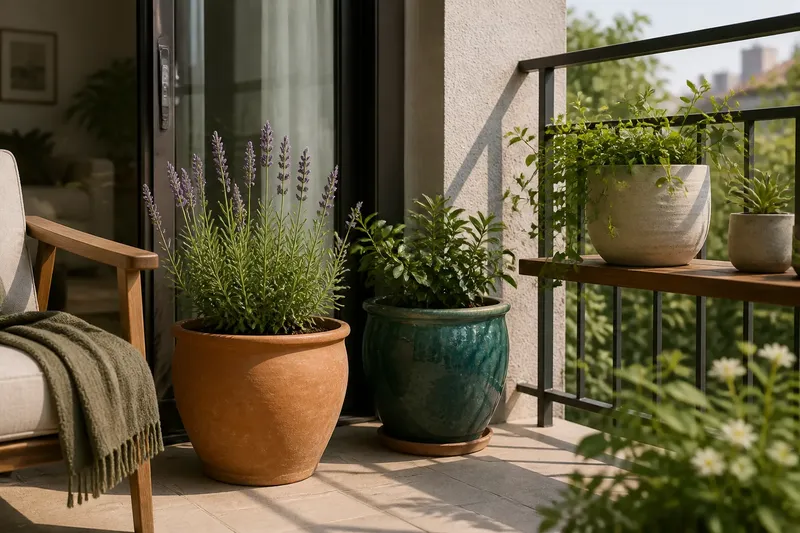
A nursery pot sits beside a balcony chair, and its owner wonders whether to set it on the sunny floor or a narrow shelf. Choosing terracotta, glazed ceramic, or lightweight resin pots affects more than appearance: each material feels different to handle and suits different places. Starting with the pot’s intended spot makes the choice clearer.
Choose each pot for its place on the balcony
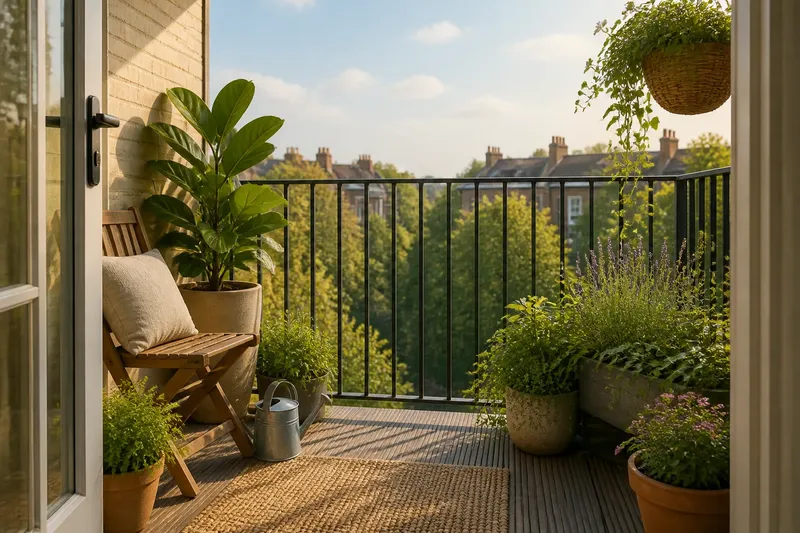
Say Maya has an invented balcony with a sunny corner, a sheltered place beside the sliding door, and a shelf near the railing. She wants to move some containers when she cleans or adjusts the arrangement, while keeping others in place. She considers the desired appearance, the effort involved in moving a filled pot, and whether the surface can support it appropriately.
Those questions can lead to different choices within the same small garden. A substantial pot can feel settled on a broad, stable floor, while a lighter container is more convenient to shift. For any shelf or railing-side position, check the support and relevant building or local rules; a pot’s material alone cannot establish that a location is suitable.
Terracotta gives a balcony a matte, earthy look
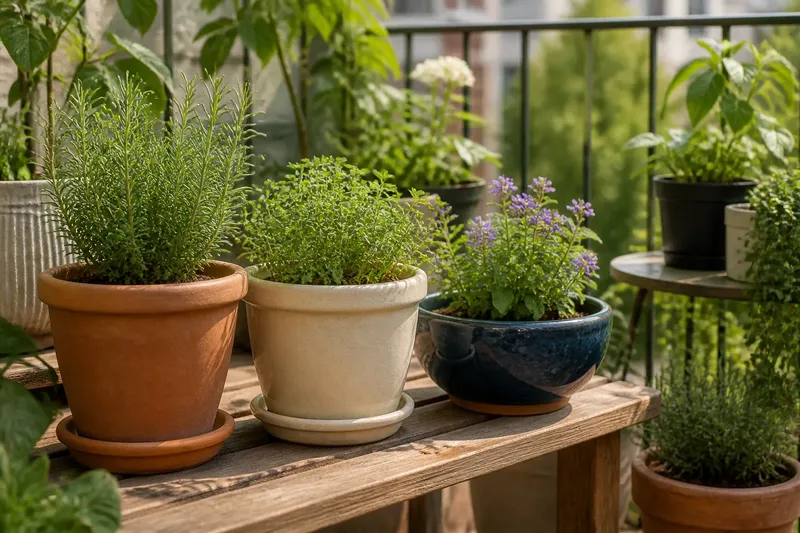
Terracotta’s warm clay color and unshiny surface pair naturally with foliage, wood, and stone. It can lend a relaxed, grounded look to a group of plants without drawing attention away from their leaves. Against pale tiles, the clay color adds warmth.
Terracotta is generally more substantial to handle than resin, which can make a pot feel anchored on a stable floor. That same heft may be inconvenient if you need to move the container often or have limited room to lift and carry it.
Unglazed clay is porous, unlike a sealed finish, so consider how the pot’s material fits the plant, drainage, and your watering habits. Check the container’s drainage arrangement and care instructions rather than choosing by color alone.
In Maya’s invented arrangement, a terracotta pot stays in the sunny corner beside the chair. Its muted color suits the tiles, and she chooses a plant and watering routine that fit the container.
Glazed ceramic makes color part of the arrangement
Glazed ceramic has a smooth, finished surface that can make color or pattern a visible feature. A subdued green or blue can echo nearby foliage; a brighter glaze can make one pot stand out. Even a plain shape can look polished beside terracotta’s matte surface.
Ceramic can be heavy once filled and is breakable, so think about access and the chance of bumps before choosing a tight passageway or a spot you often rearrange. It may suit a stable location where you want the pot to remain, but it can be awkward to shift.
Maya’s invented choice is a glazed ceramic pot beside the sliding door, where its calm color is visible from indoors and the container need not be moved often. The finish adds a focal point without making every pot compete for attention.
Lightweight resin suits containers that need to move
Resin is a synthetic material, and resin pots are often lighter to lift than comparable clay or ceramic containers. That can help when you need to sweep beneath a pot, adjust its position, or make room on a compact balcony. Some finishes imitate clay or stone; others are plain and modern.
A light container may look less anchored beside a heavy chair or masonry wall, although a simple design can also recede into a crowded corner. Consider the actual finish and shape in the intended spot instead of assuming every resin pot looks alike.
In Maya’s invented arrangement, a resin pot sits on the shelf because she expects to move it to reach the surface. She checks whether the shelf is appropriate for the filled container before placing it there; ease of lifting does not settle questions about support.
How do the three pot materials differ?
Which pot material is easiest to move?
Lightweight resin is generally easiest to lift among these three options. A planted pot is heavier than an empty one, so consider the container, growing medium, and plant together.
Which finish suits a quiet, natural look?
Terracotta has a matte, earthy appearance that tends to sit quietly among foliage and natural materials. A restrained glaze can also suit a calm arrangement, though its surface may catch the eye more readily.
Which pot makes color more prominent?
Glazed ceramic is a natural choice when you want color or surface finish to stand out. Resin pots also come in varied finishes, so compare the specific design rather than relying on the material name.
Can a balcony use several pot materials?
Yes, if each choice suits its location and use. In Maya’s invented arrangement, terracotta warms the sunny corner, glazed ceramic adds a settled patch of color, and resin remains easy to shift on the shelf.
Use a simple comparison before choosing
For an invented decision, imagine Maya is choosing among three empty pots for the same balcony. She wants one to remain by the chair, one to provide color beside the door, and one to move easily when she cleans the shelf. She checks each candidate in the intended spot and considers these observations:
- If the sunny corner needs a warm, matte appearance and the pot can stay put, then choose terracotta; if frequent lifting matters more, consider a lighter option.
- If the door-side pot should provide a visible color accent and can remain in place, then consider glazed ceramic; if the passage is tight or bumps are likely, choose a less breakable, easier-to-move alternative.
- If the shelf pot must move for cleaning, then consider lightweight resin; if the filled container is not appropriate for the shelf’s support, place it on a suitable stable surface instead.
- If the plant and potting setup call for attention to moisture, then check the material, drainage, and plant-care needs together; if they do not suit one another, choose a different container or placement.
- If a pot’s finish competes with the nearby foliage, then compare a quieter color or surface; if it complements the leaves and surrounding materials, keep it in the arrangement.
- If the intended location has restricted access or relevant building rules, then check those requirements before placing the pot; if the location is unsuitable, choose another spot.
After these checks, Maya’s invented result is a stable terracotta pot by the chair, a calm glazed accent by the door, and a resin container on the shelf only if that shelf is suitable. The tradeoff is clear: the arrangement gains varied finishes, while the resin pot provides the easiest movement and the heavier pots stay where she can leave them.
Let placement guide the final combination
When choosing terracotta, glazed ceramic, or lightweight resin pots, start with each pot’s location and how often you expect to handle it. Then consider the finish you want to see there, along with the plant’s needs and the container’s drainage. This keeps the material choice tied to the balcony you have.
Before bringing a pot home, picture it empty in its intended spot and consider how it will feel once planted. If you cannot comfortably manage it in that location, a different material or placement may make the whole arrangement easier to live with.