The Matching-Pot Myth: Why a Little Variation Can Look Settled
A matching-pot arrangement can feel rigid. Learn how repeated color or shape connects varied containers into a settled, personal balcony display.
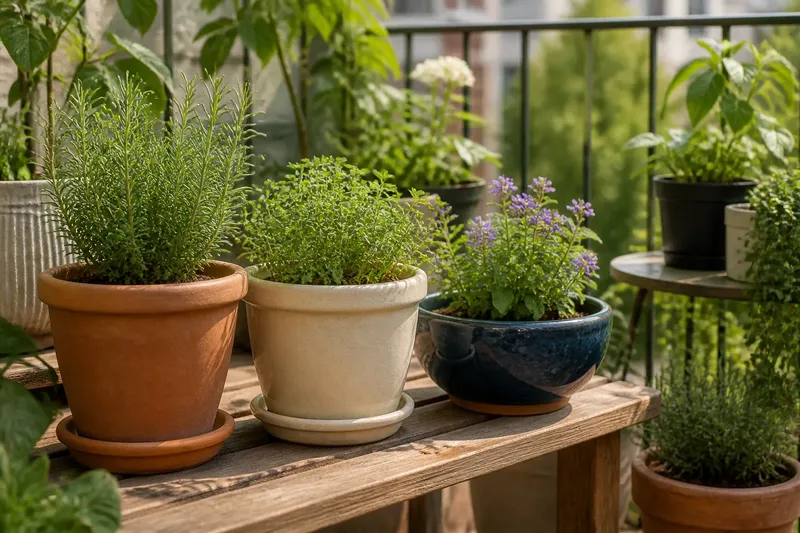
You bring home a terracotta herb pot, but the other containers on your balcony are glazed blue, plain white, and plastic black. Matching-pot arrangements can seem like the obvious solution, yet a small detail repeated across varied containers can make them feel related without replacing the pots you own.
The useful question is not whether every planter matches. It is whether the containers suit their plants and whether one feature—such as color, rim shape, or texture—links them without erasing their differences.
Matching pots are not required for a coherent group
Identical containers create consistency through repetition. A mixed group can feel just as deliberate when one visual feature recurs and the other details are allowed to vary.
This distinction matters in a small balcony collection, where pots often arrive at different times and serve different plants. Treating every new container as a set-matching problem can lead to needless replacement, while a shared accent lets useful containers stay in service.
Choose one detail that can connect different containers
Compare color, rim shape, surface, and silhouette. If the pots have little color in common, rounded sides or a similar lip may provide a quieter link; if their shapes differ, a repeated color can do the work.
Begin with one shared feature. When several characteristics repeat at once, the group can lose the contrast that makes its individual pots interesting.
Keep function ahead of appearance. A decorative similarity is not a reason to move a plant into a container that lacks suitable drainage or otherwise does not fit its needs.
Let each container keep its own character
A patterned pot, a rough clay surface, and a smooth plastic planter do not need to be made alike. Their differences give the group texture; the repeated detail simply helps the eye recognize a relationship among them.
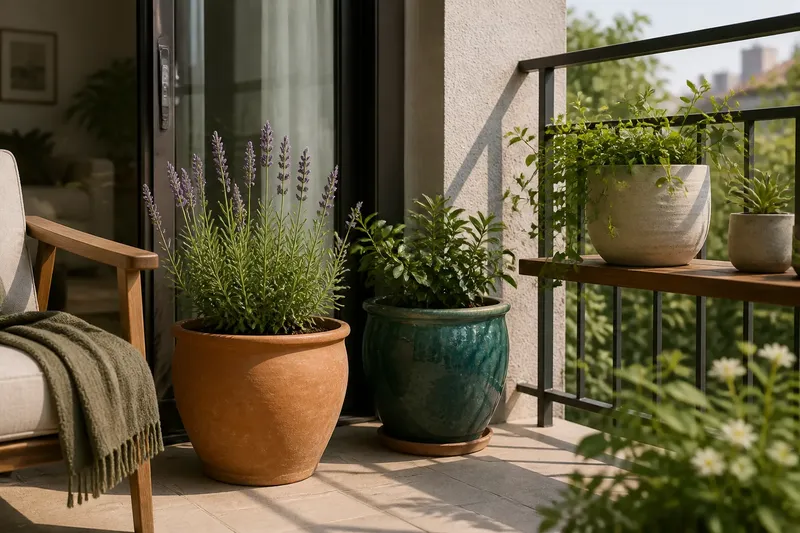
Say you have a terracotta herb pot, a white planter with a rounded rim, and a blue-glazed bowl. Imagine the terracotta pot has a rounded rim too: grouping the two rimmed containers with the blue bowl gives the first pair a clear link, while the bowl remains a distinct accent. If the blue bowl instead shares a small blue detail with another container, that color can provide the connection without changing the pots.
Check whether the shared detail is doing enough?
How many features should the containers share?
Start with one feature, such as a color or rim shape, and notice whether it is easy to recognize among the pots. If the connection is too faint, bring containers with that feature into the same grouping before adding another repeated detail.
Can patterned pots sit beside each other?
Yes, if a color or form links them and their patterns remain distinguishable. If the designs compete, place a simpler container between them or give one patterned pot a separate role.
What can connect pots with different colors?
Look for a shared outline, rim, or surface texture instead. If no container detail repeats, a plant’s leaf shape can provide a visual link without changing the pots.
Should I replace a pot that stands out?
Not for appearance alone. If the pot works for its plant, keep it and try a different grouping; if it is unsuitable or difficult to use, choose a functional replacement first.
Use a simple check before changing the group
For each container, note its plant, its useful features, and the detail it might share with another pot. Then use the result to decide what to keep, group, or reconsider:
- Check whether the pot has a drainage opening; if it does, keep it in consideration for plants that need drainage, and if it does not, choose an appropriate container or use it only in a way that does not compromise the plant’s needs.
- Check whether the pot is stable on its current surface; if it is steady, retain its position as an option, and if it wobbles, move it to a stable location or choose a suitable support.
- Check whether a color repeats on another pot; if it does, group those containers as a color-linked pair, and if it does not, look for a repeated shape or texture.
- Check whether a rim or silhouette repeats; if it does, use that form as the connecting detail, and if it does not, keep the containers separate or let the plants provide the visual link.
- Check whether a patterned pot competes with another patterned pot; if the designs remain distinct, keep them together, and if they feel busy, separate them with a plainer container.
- Check whether you can reach each plant to water and tend it; if you can, keep the arrangement workable, and if you cannot, move a container or change the grouping.
Imagine your starting group is a red clay herb pot, a cream planter, and a dark bowl; all three are stable and have drainage, but none shares a color. You notice that the clay pot and cream planter both have rounded rims, so you place them together and leave the dark bowl beside them as a separate accent. The resulting decision is to keep all three pots: the rim links two, while the bowl’s different color remains a deliberate contrast rather than a reason to shop for a matching set.
Keep the arrangement useful as plants grow
As foliage fills out, it may cover a pot’s rim or make a once-distinct outline less visible. If the link disappears, try grouping the containers with the shared feature closer together; if their practical roles have changed, let plant care determine where each one belongs.
Check that watering remains straightforward and that containers and supports suit the balcony surface. Follow the pots’ care instructions and any applicable building or balcony rules when deciding where and how to place them.
A matching-pot arrangement is only one way to create a sense of order. Repeating a single color, curve, or texture can connect varied containers while leaving each one useful and recognizable.